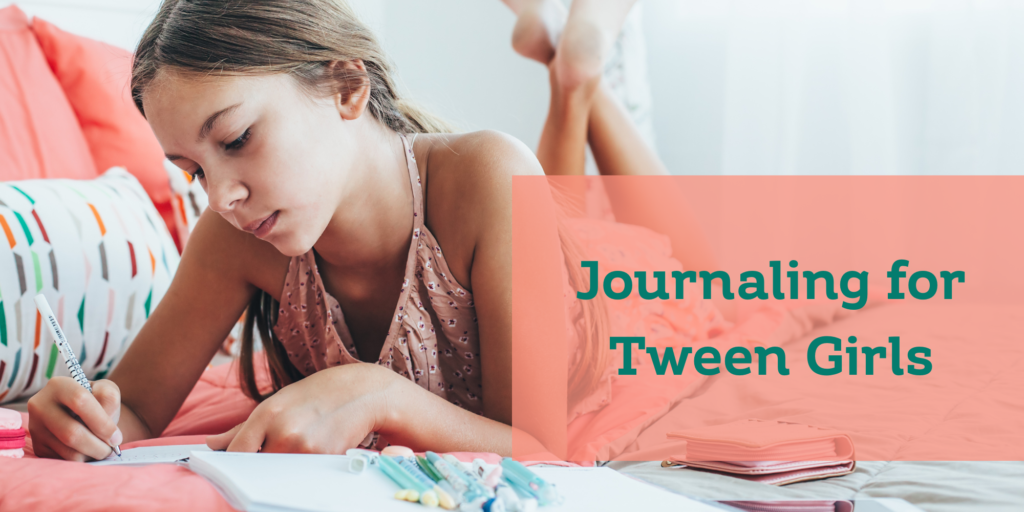
You Can’t Fix Her Feelings — But You Can Give Her Tools
Your daughter comes home from school, slams her bedroom door, and won’t talk to you. Or she bursts into tears over something that seems small to you but feels enormous to her. Or she’s lying awake at night, replaying a friendship conflict over and over, unable to settle her mind.
You want to help. You want to fix it. But when you try to talk, she shuts down. When you offer solutions, she gets more frustrated.
Here’s what I’ve learned through research and experience: you can’t fix her feelings. But you can give her tools to work through them herself.
One of the most powerful tools? Journaling.
I know what you might be thinking — journaling sounds like something she’ll resist, or something that only works for “naturally reflective” kids. But here’s the thing: journaling isn’t about being a good writer or even liking writing. It’s an emotional regulation skill that gives tweens a safe place to process what’s happening inside their heads and hearts.
And the research backs this up. Study after study shows that expressive writing helps children and adolescents manage anxiety, process difficult emotions, and build resilience.
This guide will show you how to introduce journaling in a way that actually works — even for reluctant kids.
Why Tweens Struggle Emotionally (and Why Journaling Helps)
If your daughter seems to swing between extreme emotions — elation one minute, despair the next — that’s not drama. That’s brain development.
Here’s what’s happening:
- The emotional brain develops faster than the thinking brain. The limbic system (which processes emotions) matures earlier than the prefrontal cortex (which regulates emotions). According to research from Harvard, this creates a gap where tweens feel emotions intensely but don’t yet have fully developed tools to manage them.
- Tweens live in “big feelings now.” What happened at lunch feels like the most important thing in the world. Tomorrow doesn’t feel real yet. This isn’t selfishness — it’s how their brain processes time and importance.
- Social relationships become more complex. Friendships matter deeply at this age, and the social dynamics are genuinely complicated. Who’s in, who’s out, who said what — it’s exhausting and emotionally consuming.
This is where journaling comes in.
Research published in multiple studies shows that expressive writing — putting thoughts and feelings into words on paper — activates the thinking brain and helps calm the emotional brain. Writing slows down the emotional storm enough that tweens can start to make sense of what they’re feeling.
Journaling helps by:
- Creating distance from overwhelming emotions (writing about it makes it less consuming)
- Organizing chaotic thoughts into something manageable
- Giving the prefrontal cortex practice in emotional regulation
- Building a record of experiences that helps kids see patterns and growth
It’s not magic. But it’s one of the most accessible, research-backed tools we have for helping kids process big feelings.
Benefits of Journaling for Tween Girls
The benefits go far beyond just “having a place to write.” Here’s what research shows journaling can do:
- Builds self-confidence — Studies demonstrate that regular reflective writing helps children develop a stronger sense of self and better self-esteem.
- Improves emotional vocabulary — Naming emotions actually calms them. When she can write “I feel anxious and disappointed” instead of just “I feel bad,” she gains control.
- Reduces stress and worry — Research on expressive writing shows significant reductions in anxiety and rumination in young people who journal regularly.
- Helps girls make sense of friendships — Writing about social situations helps them process what happened, see different perspectives, and figure out how they want to respond.
- Supports resilience and problem-solving — Studies show that adolescents who journal regularly develop better coping strategies and problem-solving skills.
- Cultivates gratitude and positive mindset — Research on gratitude journaling shows measurable improvements in mood and optimism in young people.
- Improves writing and reflection skills — As a bonus, regular writing improves communication skills and critical thinking.
Important note: Journaling isn’t therapy — but it gives kids tools that therapists actually use. If your daughter is struggling significantly with anxiety, depression, or other mental health concerns, journaling can be a helpful complement to professional support, not a replacement.
Different Types of Journaling (Let Her Choose!)
Here’s something crucial: journaling doesn’t have to look one specific way. In fact, giving your daughter choices increases the chances she’ll actually do it.
1. Gratitude Journaling
Focus on what went well, what she’s thankful for, or small moments that made her smile. This is particularly powerful for anxious or negative-thinking kids.
If you want something that nudges her to notice the good stuff in her day, an empowering gratitude-style journal like this one can help her build a positive mindset with simple, guided prompts: Empowering Journal for Teen Girls.
2. Feelings Journaling
A safe place to pour out emotions without judgment. “Today I felt…” or “I’m angry about…” or “I’m worried that…”
For deep feelers or sensitive kids, a guided feelings and mindfulness journal can make it easier to explore emotions step by step. This one is designed to help tweens understand their thoughts and feelings more clearly: HappyMe Teen Mindfulness & Self-Discovery Journal.
3. Prompt-Based Journaling
For kids who stare at blank pages, prompts give structure. Questions like “What made me proud today?” or “One thing I learned about myself this week…”
If your child likes having a clear question to answer each day, a mindfulness journal with built-in prompts can be really helpful. This one gently guides her to reflect without feeling overwhelmed: Mindfulness Journal for Teens: Prompts and Practices.
4. Creative Journaling
Doodles, lists, quotes she likes, collages, mind maps. This works brilliantly for visual thinkers who don’t love traditional writing.
Some tweens like their journal to feel more like an art project than a notebook. A creative notebook with accessories and numbered pages can be perfect for drawing, listing, and decorating: Numbered Creative Notebook with Accessories.
5. Goal and Habit Journals
Tracking progress toward goals, noting what’s working, celebrating small wins. Great for achievement-oriented kids.
If your daughter is motivated by progress and loves checking things off, a goal and habit journal that focuses on building routines can be very satisfying: Goal-Focused Teen Journal.
6. Private “Lockable” Diaries
Traditional diary with a lock. The physical privacy signal matters to some tweens — it makes the journal feel truly safe.
For girls who will only write if they know their words are truly private, a diary with a real lock and key can make all the difference: Lockable Journal with Key for Girls.
Let her choose. Ask: “Which of these sounds most interesting to you?” Ownership increases follow-through.
How to Help Your Child Actually Start (Without Pushing)
This is where good intentions often go wrong. Parents buy an expensive journal, hand it over with enthusiasm, and then… nothing happens. Or it lasts three days.
Here’s how to make it stick:
1. Pick a journal SHE likes
Not the one you think is perfect. The one she picks. Color, style, lock, no lock — her choice. If she feels ownership from the start, she’s more likely to use it.
2. Start with just 5–10 minutes
Not 30 minutes of deep reflection. Just a few sentences. “What’s one thing you noticed today?” That’s enough.
3. Tie it to an existing routine
After dinner, before bed, Saturday mornings — whatever works. Habit stacking (attaching a new habit to an existing one) is powerful. Research on habit formation shows this dramatically increases consistency.
4. Never correct spelling or grammar
This isn’t school. This is a safe space. Correcting her writing turns journaling into homework.
5. Respect privacy completely
Don’t read it unless she specifically invites you to. Trust is everything here.
6. Model journaling yourself
Let her see you writing in your own journal. Say: “I’m taking a few minutes to write about my day.” Kids learn what we do, not just what we say.
Try this script:
“This isn’t about writing something perfect — it’s a safe place to think and feel. Even a few sentences count.”
Writing Prompts Tweens Will Actually Use
For kids who struggle with blank pages, prompts can be a lifeline. Here are 15 prompts that work well for tweens. You can print this list and keep it near her journal, or offer one at bedtime when you ask if she’s going to write tonight.
- Something that made me smile today was…
- A problem I solved today was…
- One thing I’m worried about, and what might help is…
- If my feelings could talk right now, they would say…
- Today I felt proud when…
- Something I want to get better at is…
- A person who made my day better was…
- Three things I’m grateful for today are…
- Something hard that happened, and how I handled it…
- What I wish people understood about me is…
- If I could change one thing about today, it would be…
- Something I’m looking forward to is…
- A choice I made today that I feel good about is…
- When I feel overwhelmed, what helps is…
- One thing I learned about myself this week is…
Keep it simple. She doesn’t need to answer all of these. One prompt, a few sentences. That’s a win.
What to Do if Your Child Hates Writing
Not every kid loves traditional writing. And that’s okay — journaling can take different forms.
If your daughter resists writing paragraphs, suggest these alternatives:
- Bullet points — Just list feelings, events, or thoughts. “Angry. Tired. Worried about Friday. Excited for the weekend.”
- Doodles or mind maps — Draw how she feels. Create a visual map of her thoughts. This works beautifully for visual thinkers.
- List journaling — “Three good things today.” “Five things I’m grateful for.” “Two things I’m worried about.” Simple lists, no full sentences required.
- Voice-to-text journaling — Speak into her phone and let it transcribe. Some kids process better by talking than writing.
- Comic-style pages — Draw simple stick figures with speech bubbles showing what happened or how she felt.
The message is this: journaling doesn’t have to look like schoolwork. It’s about processing thoughts and feelings, not producing perfect prose.
Important Parent Boundaries
This section is crucial because it builds trust — and trust is what makes journaling work.
- Don’t secretly read it. Ever. Even if you’re worried. Even if you’re curious. Reading her private journal without permission destroys trust and makes journaling feel unsafe.
- Ask permission if you’re genuinely concerned. If you’re worried about her wellbeing, have a conversation: “I’ve noticed you seem really down lately. Would you be willing to share what you’ve been writing about, or talk to me about what’s going on?”
- Don’t pitch journaling as a cure. It’s a tool, not a treatment. Avoid saying “Just write in your journal and you’ll feel better.” That creates pressure and resentment.
- Watch for warning signs. If you notice signs of serious depression, self-harm thoughts, or other concerning mental health issues, journaling is not enough. Seek professional help immediately. Trust your instinct — if something feels seriously wrong, act on it.
The goal: Create a safe space where she can be honest without fear of judgment, punishment, or invasion of privacy.
Recommended Journals for Tween Girls
You don’t need anything fancy — a simple notebook works perfectly. But if you’re looking for journals specifically designed for tweens, here are some families love, organised by purpose.
Private and Lockable
Lockable Journal with Key for Girls
A private diary that comes with a real lock and key — ideal for tweens who value privacy and want to feel safe putting their thoughts on the page. Great for beginners who might be shy about writing at first and need a journal that feels truly secure.
Lockable Daily Journal with Prompts for Tweens
Combines a lockable design with gentle daily prompts that help reluctant writers get started. Ideal for kids who want structure as well as privacy — the questions give a helpful launch point without pressure.
Creative Journaling
Numbered Creative Notebook with Accessories
A flexible notebook that includes numbered pages and accessories, perfect for creative thinkers who like expressing themselves with words, doodles, and colour. Great for kids who enjoy visual journaling or adding their own flair with stickers and drawings.
DIY Creative Writing and Journaling Kit
Designed for kids who do not want a plain lined notebook, this set encourages imaginative journaling with decorative elements, prompts, and creative layouts. Ideal for tweens who want journaling to feel more like a project than homework.
Gratitude Journals
Empowering Journal for Teen Girls
Focused on gratitude and positive reflection, this journal encourages tweens to notice good things, track accomplishments, and build confidence. Ideal for kids who enjoy uplifting prompts and benefit from a daily positivity ritual.
Clever Fox Gratitude Journal
A structured gratitude journal with inspirational prompts and enough space for deeper reflection. Perfect for tweens beginning a journaling habit who like having a clear focus each day: what went well and what they are thankful for.
Feelings and Mindfulness Journals
HappyMe Teen Mindfulness and Self-Discovery Journal
Designed to guide tweens through emotional awareness and mindfulness exercises, this journal helps them name and understand their feelings. A good fit for deep thinkers or sensitive kids who need a gentle, structured way to process big emotions.
Girl Power Affirmations Journal
Filled with encouraging affirmations and prompts, this journal supports self-confidence and positive self-talk. Ideal for tweens who like short, powerful messages and need reminders of their own strength and worth.
Goal and Habit Journals
Goal-Focused Teen Journal
Helps kids set goals, track progress, and build simple habits. Ideal for tweens who thrive on structure, like ticking boxes, and want to see their efforts add up over time.
This Year Will: 52-Week Goal Journal
A year-long journal that guides kids week by week through reflection, planning, and tracking. Excellent for tweens who are ready to build a long-term journaling and goal-setting habit rather than short bursts.
Prompted Reflection Journals
Mindfulness Journal for Teens: Prompts and Practices
Filled with guided prompts that encourage calm reflection and self-awareness, this journal is great for tweens who need structure and enjoy answering thoughtful questions rather than starting from scratch.
This Me: An Exploration Journal
Blends fun prompts with imaginative thinking exercises, making it ideal for creative kids who like exploring ideas, dreams, and identity alongside journaling. A good bridge for tweens who want guidance but still plenty of freedom.
Remember: the “best” journal is the one she’ll actually use. Let her choose based on what appeals to her, not what seems most educational to you.
Give Her a Place to Feel, Not Just Behave
Journaling won’t stop the big feelings. It won’t prevent friendship drama or eliminate anxiety or make the tween years easy.
But here’s what it will do: it will teach her that she can handle her feelings.
When she writes about her worry, her anger, her confusion, her joy — she’s learning that emotions are manageable. That she can sit with them, examine them, and move through them.
She’s learning that her thoughts and feelings matter. That she has a voice. That she can figure things out.
And those lessons? They build resilience that lasts far beyond the tween years.
You can’t fix her feelings. But you can give her a tool that helps her work through them herself. And that’s more valuable than any solution you could offer.
Note: This post contains some affiliate links. If you purchase through them, I may earn a small commission at no extra cost to you. I only recommend resources I genuinely believe can help.
Want to raise a girl who thinks for herself and believes in her own brilliance? Girls who develop an interest in science build resilience, curiosity, and the confidence to tackle any challenge. Spark her love of STEM with the Hey Smart Girl book series — because every girl needs to believe that she is smart.
More Tools to Help Your Tween Thrive This Year
How to Help Your Tween Focus
Simple, science-backed routines to help your tween concentrate better without nightly battles.
Read more →
Goal Setting for Kids
Teach your tween to break big goals into doable steps — and actually follow through.
Learn the strategies →
Study Skills Every Tween Needs
The core organizing and study habits that make school feel manageable again.
Read more →