Chemistry for Kids: Easy Experiments, Real Science, and the Reactions That Shape Our World
From the rust forming on a forgotten nail to the fireworks lighting up a summer sky, chemistry explains why the world changes, reacts, and transforms right in front of us.
Chemistry is one of the most powerful ways to help a child fall in love with science, because it’s everywhere already — in the kitchen, the bathroom cabinet, even inside her own body. Why does bread rise? What makes fireworks burst with colour? Why do some things fizz and others don’t?
Before you dive into the experiments and the free chapter download, here are five facts to get you started.
Five chemistry facts that make you stop and think
A single strand of your hair is about a million atoms wide
If an atom were the size of a marble, that marble would have to grow to the size of the entire Earth to keep the comparison fair.
Atoms are mostly empty space
If an atom’s nucleus were the size of a marble in a football stadium, the electrons would be zooming around near the back seats.
Gold doesn’t rust, tarnish, or corrode — ever
Archaeologists have pulled gold jewellery out of ancient tombs thousands of years old, and it still shines exactly as it did the day it was buried.
Glow sticks don’t use electricity or batteries at all
Bend one and you trigger a chemical reaction between two liquids inside, releasing energy as light instead of heat.
Diamonds and pencil lead are made of the exact same element
Both are pure carbon — the only difference is how the atoms are arranged.
What you’ll find on this page
- Chemistry experiments for kids you can do at home
- A free chapter download so you can try the book before you buy it
- Simple explanations that make big ideas easier to understand
- A clear next step if she wants more chemistry after the experiments
Chemistry experiments for kids
Hands-on science is where so many children suddenly get it. Instead of memorising a fact, they see it happen. They test it. They talk about it. They remember it.
These chemistry experiments are designed to be simple enough to do at home, but still full of real science. Each one helps your child connect a big chemistry idea to something she can actually observe for herself.
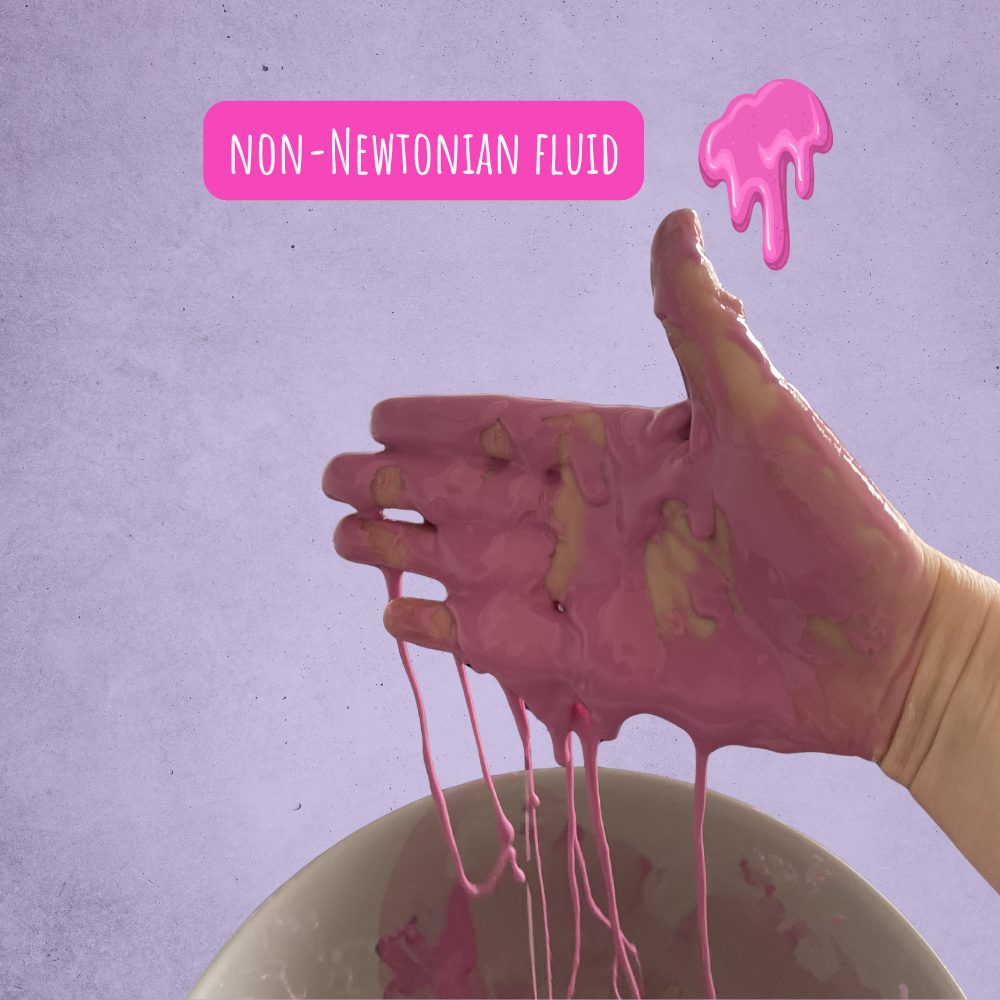
The States of Matter Experiment That Breaks All the Rules
Two ingredients, one bowl, and a non-Newtonian fluid that is somehow both solid and liquid at the same time.
Try it →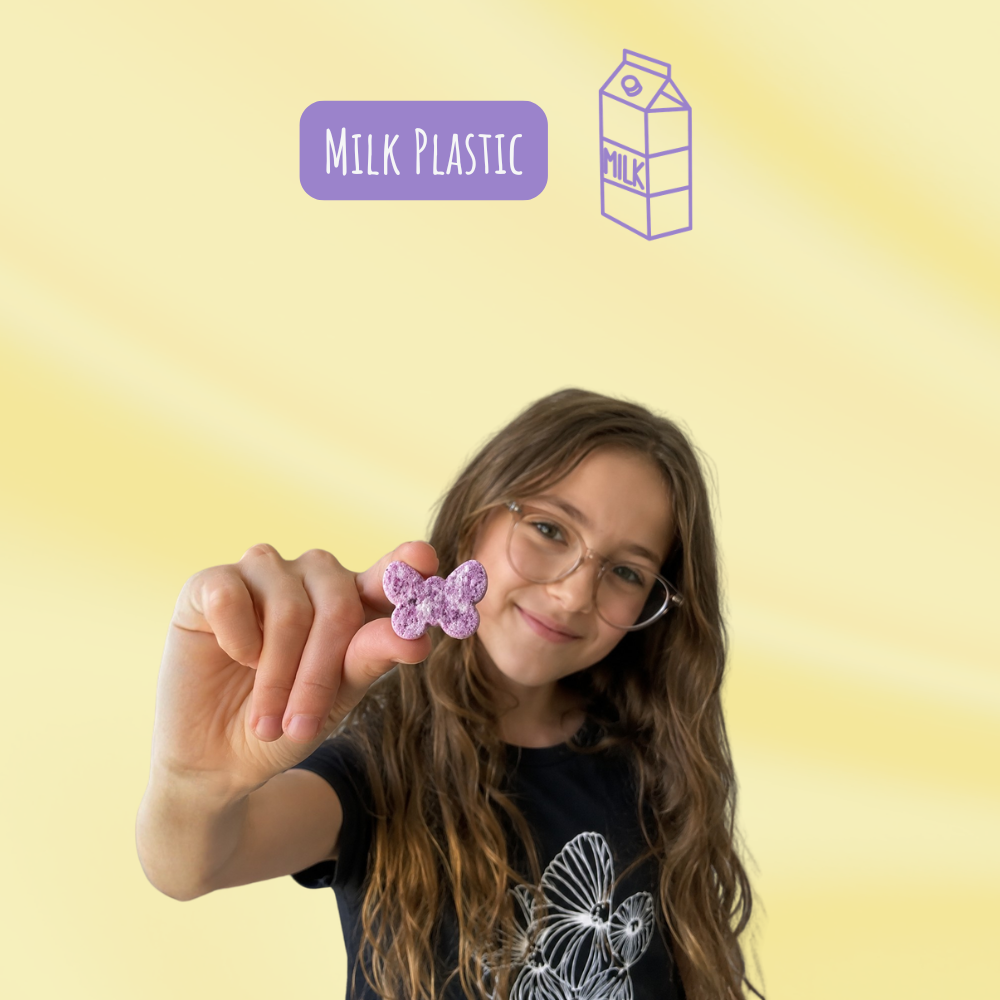
Make Plastic from Milk
A glass of milk, a splash of vinegar, and a chemistry experiment that connects to one of the biggest problems scientists are working on today.
Try it →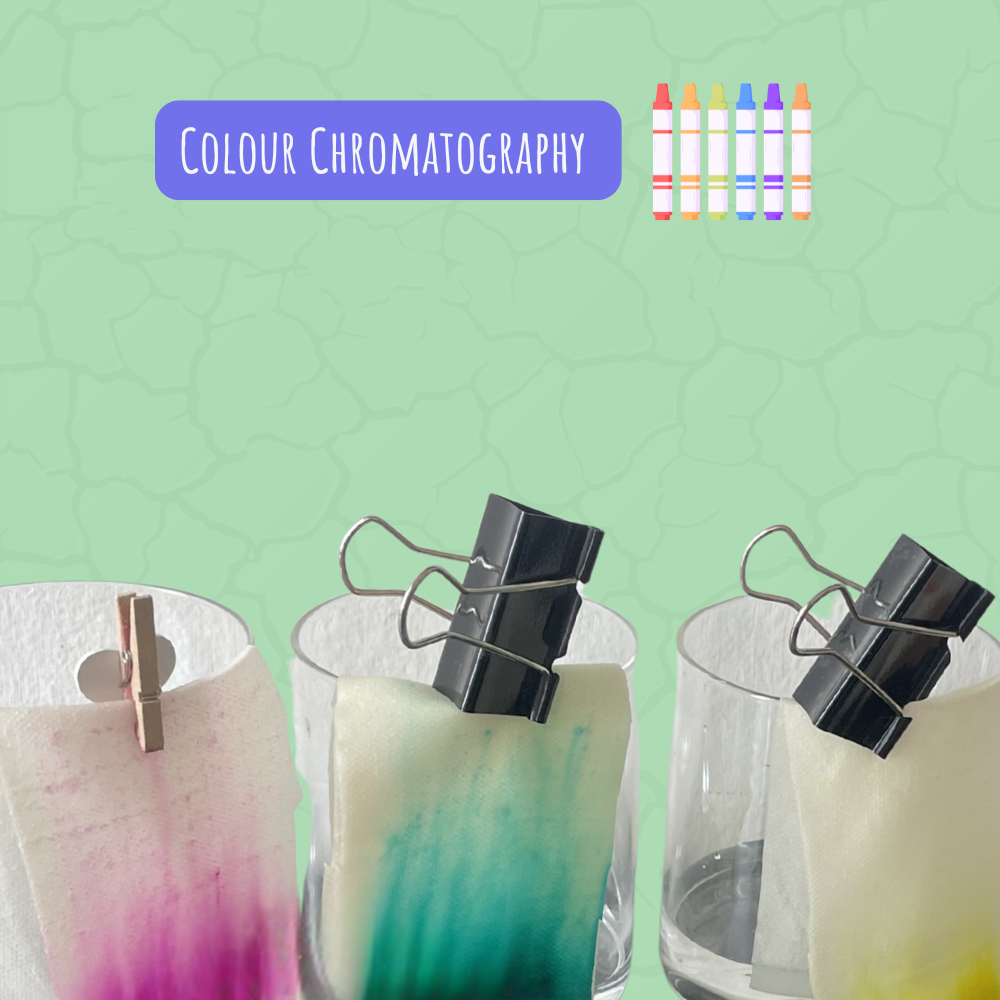
Colour Chromatography: Hidden Colours in Every Marker
Discover the hidden colours inside washable markers with this simple, fast-results chemistry experiment.
Read the post →Why chemistry matters for kids
Chemistry helps children understand how the world actually works — not just that things happen, but why. Why bread rises, why ice floats, what’s really inside a fizzy drink, and why some things change colour, fizz, or glow.
It also underpins almost every field of modern science and engineering. The fundamentals your daughter learns now are the same foundations that power medicine, clean energy, new materials, and food science.
That makes chemistry one of the most practical, hands-on, and everyday subjects a child can learn.
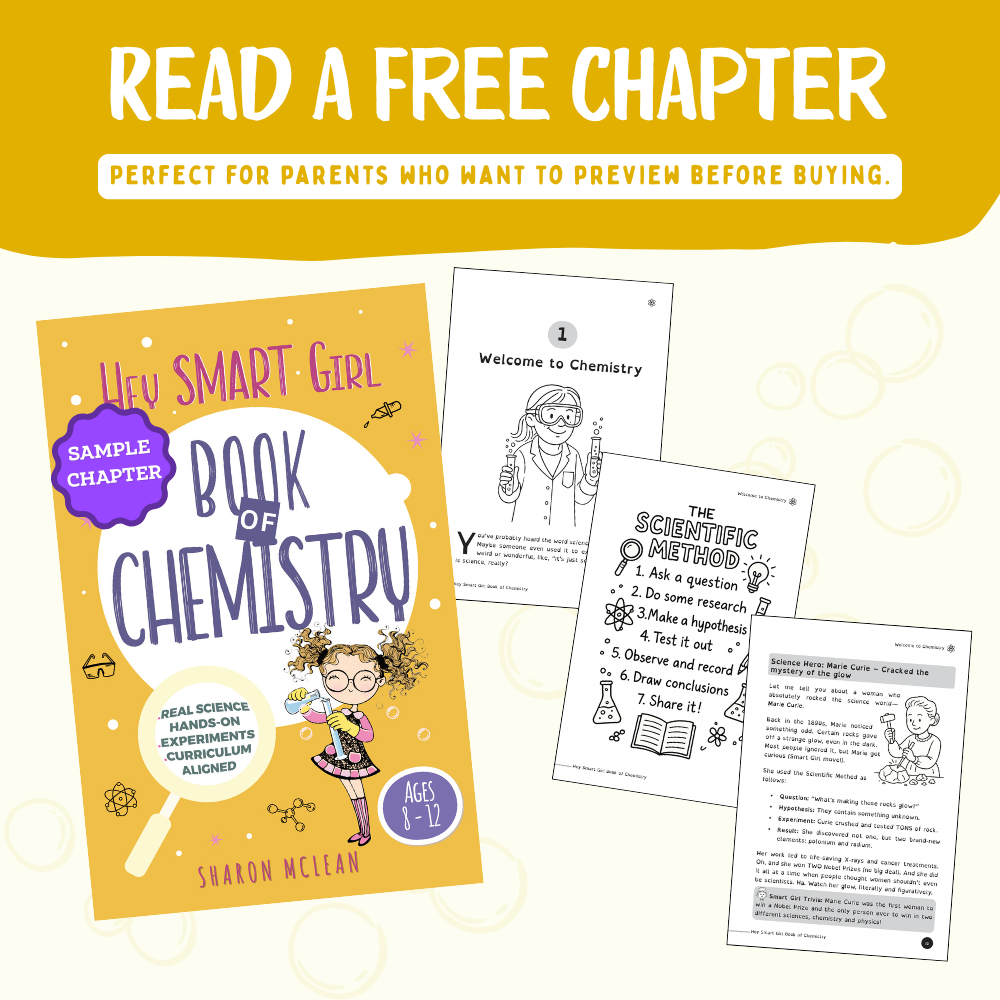
Read a Free Chapter
Not sure if it’s the right fit? Download a free chapter and let your daughter try a real section of the book for herself.
Inside the preview she’ll discover:
- A hands-on rust-formation experiment she can actually try
- Real pages from the book, not just a teaser
- The inspiring true story of Marie Curie
If she enjoys the sample, you’ll know you’ve found the right book.
Download the Free Chapter
Ready to go deeper?
The Hey Smart Girl Book of Chemistry brings together atoms, molecules, reactions, acids and bases, the periodic table, 30+ hands-on experiments, and the science behind everything from soap to stars — written for curious girls aged 8–12.
Explore the Chemistry BookChemistry for kids: quick answers
What is chemistry for kids?
Chemistry for kids is the study of what things are made of and how they change — including atoms, molecules, reactions, acids and bases, and the periodic table. It explains why things fizz, change colour, melt, burn, or react when mixed together.
What are some easy chemistry experiments for kids?
Some of the best easy chemistry experiments for kids include the non-Newtonian fluid experiment, making plastic from milk, and colour chromatography with washable markers. All can be done at home with everyday materials.
Is the free chapter really from the book?
Yes — the free chapter download is a real section taken directly from Hey Smart Girl: Book of Chemistry, not a separate summary. It includes a hands-on experiment and a real science hero story, so you’ll know exactly what the full book feels like before deciding to buy it.