
25 Mind-Blowing Chemistry Facts for Kids
You know that moment when your child asks you something completely out of nowhere — usually when you’re already trying to do five things at the same time and just do not have the bandwidth to think — and you think, I genuinely have no idea how to answer that?
What if, just once, you were the one with the jaw-dropping answer?
That’s what this post is for. Twenty-five chemistry facts that are genuinely astonishing — the kind that stop a conversation dead, make your daughter look at you like you might actually be brilliant, and just might spark a curiosity in her that lasts a lifetime.
No jargon. No equations. Just the good stuff, with a little bit of the science behind it so you actually understand why it’s extraordinary.
Grab a coffee. These are worth savouring.
Want these facts as a printable card for your daughter?
Atoms and the invisible world
1. A single strand of your hair is about a million atoms wide.
Atoms are so small you can’t see them, even with a regular microscope. If an atom were the size of a marble, that marble would have to grow to the size of the entire Earth to keep the comparison fair. You are, quite literally, made of more atoms than there are stars we can count.
2. Scientists can’t actually say exactly where an electron is at any given moment — only where it might be.
Quick refresher: every atom has a tiny, dense centre called a nucleus, and electrons are the much smaller particles that whizz around it — a bit like planets orbiting a sun, except nowhere near as orderly.
Electrons move so fast and are so small that pinning down their exact location is like trying to photograph a speeding tennis ball in a pitch-dark room. Chemists work with probability instead of certainty — and somehow, that’s still enough to build the entire periodic table.
3. Atoms — the things that make up absolutely everything — are mostly empty space.
If an atom’s nucleus were the size of a marble sitting in the centre of a football stadium, the electrons would be whizzing around somewhere up near the back seats. Everything in between? Empty. Which means this book, your chair, the chair you’re sitting on, and you, are all mostly nothing at all — just arranged in a way that happens to feel completely solid. Sit with that one for a minute.
4. Gold doesn’t rust, tarnish, or corrode — ever.
Archaeologists have pulled gold jewellery out of ancient tombs thousands of years old, and it still shines exactly as it did the day it was buried. Most metals react with oxygen over time. Gold simply doesn’t. (This is real gold we’re talking about, of course — I wouldn’t recommend testing it on your own jewellery, just in case it’s not quite as pure as the tomb stuff.)
Reactions that change everything
5. Your stomach is a working chemistry lab, right now.
Every time you eat, acids and enzymes in your stomach break big food molecules into smaller ones your body can actually use — and the process produces gases like carbon dioxide and methane. Yes, that’s where burps and toots come from. Chemistry, doing its job.
6. A purple accident in 1856 changed fashion forever.
An 18-year-old chemist was trying to make medicine in a dim, gas-lit lab when his experiment went wrong and produced a strange purple residue instead. Rather than binning it, he tested it — and discovered the world’s first synthetic dye. Before that, purple clothing was so rare and expensive only royalty wore it. One “failed” experiment made it available to everyone.
7. Bananas are very slightly radioactive — and so are you.
Bananas contain potassium, and a tiny fraction of all potassium atoms are naturally radioactive. So are brazil nuts. So, in fact, is the human body, since we’re full of potassium too. It’s an entirely harmless amount — but it’s real, measurable radioactivity, in your fruit bowl.
8. Glow sticks don’t use electricity or batteries at all.
Bend one and you trigger a chemical reaction between two liquids inside, releasing energy as light instead of heat. Scientists call it chemiluminescence — light made entirely from chemistry, with no fire, no bulb, and no plug.
Acids, bases, and the chemistry on your tongue
9. The reason lemons make you pucker is a tiny chemistry test happening on your tongue.
Acids — like the citric acid in lemons — trigger your sour taste receptors. It’s your body’s built-in warning system for “this might not be safe to eat,” even though lemons, thankfully, are perfectly fine.
10. Your own stomach acid is strong enough to dissolve metal — slowly.
Stomach acid sits at around pH 1.5 to 3.5, similar in strength to battery acid. The only reason it doesn’t dissolve your stomach is that the stomach lining constantly regenerates a protective mucus layer faster than the acid can damage it.
11. Red cabbage juice is a natural pH indicator.
Squeeze or boil red cabbage and the purple liquid you get will turn pink in acids and green or yellow in bases — no lab equipment required, just your kitchen and curiosity.
The periodic table’s hidden stories
12. The metal used in spacecraft and hip replacements was discovered by accident in a pile of river sand.
In 1791, an English clergyman examining black sand near a Cornish river found an unusually heavy, light-coloured metal nobody could identify — what we now call titanium. It took scientists decades to properly understand it, but today titanium is prized for an unusual combination: incredibly strong, yet remarkably light. That’s exactly why it’s used in everything from hip replacements (strong enough to last decades inside the human body) to spacecraft (light enough to actually get off the ground).
13. Helium balloons that float away are saying goodbye to Earth for good.
Helium is so light that once a balloon pops or the gas escapes, the helium atoms drift up through the atmosphere and keep going — they don’t fall back down like most gases do. The balloon’s rubber skin won’t make it to space, but the helium inside genuinely will, slowly, over time, just zooming off into the solar system and beyond, never to return.
14. An old Victorian phrase about madness is based on real chemistry.
“Mad as a hatter” comes from 19th-century hat-makers who used a mercury-based chemical to shape felt. Breathing the fumes for years caused tremors, memory loss, and hallucinations — a real industrial illness hiding inside a phrase people still use today without knowing why.
15. Fluorine is so reactive it can set water on fire.
Most things need oxygen to burn. Fluorine is so aggressive it can react explosively with water itself — one of the few substances on Earth that turns the “fire needs oxygen” rule upside down.
States of matter and the chemistry that keeps you alive
16. If ice sank instead of floated, most life on Earth as we know it might not exist.
Ice floats because it’s less dense than liquid water — a genuine chemical oddity. If it sank, lakes and oceans would freeze solid from the bottom up every winter, wiping out fish, plants, and entire ecosystems. One quirky molecule shape is quietly protecting life on the whole planet.
17. There’s a temperature where the line between liquid and gas simply disappears.
Heat and pressurise certain substances enough and they reach what’s called a “supercritical” state — no longer clearly liquid or gas, but something in between. Coffee companies actually use supercritical carbon dioxide to make decaf coffee without using harsh chemical solvents.
18. Liquid nitrogen is so cold it can freeze a banana solid enough to hammer a nail.
At around -196°C, liquid nitrogen turns a soft banana into a tool hard enough to bend metal — for a few seconds, before it warms back up and turns to mush again.
Chemistry shaping the future
19. The battery in your phone exists because of a 1970s gamble on the lightest metal on the periodic table.
Scientists went looking for a lightweight material that could store huge amounts of energy efficiently, and the periodic table pointed them straight to lithium. That single choice eventually powered the lithium-ion battery — the same technology now running phones, laptops, and electric cars.
20. Plastic takes hundreds of years to break down — but some scientists are now growing plastic-eating enzymes.
Researchers have discovered and engineered enzymes that can chew through certain plastics in days instead of centuries, a genuine real-world chemistry race against pollution happening in labs right now.
21. Diamonds and the graphite in your pencil are made of exactly the same element.
Both are pure carbon. The only difference is how the atoms are arranged — in diamond, every carbon atom is locked into a rigid 3D pyramid shape with its neighbours, making it the hardest natural material on Earth. In graphite (pencil “lead”), the atoms are arranged in loose, flat sheets that slide easily over one another, which is exactly why it rubs off onto paper so easily.
So can you actually turn pencil lead into a diamond? In theory, yes — scientists have done it. It takes enormous heat and crushing pressure, similar to the conditions found deep inside the Earth where natural diamonds form over millions of years. In a lab, with the right equipment, it can be done in a matter of hours instead. Same ingredient, wildly different result, just from how the atoms are squeezed together.
22. Scientists can now 3D-print human tissue using chemistry, not ink.
“Bio-inks” made of living cells and chemical gels are layered by 3D printers to build replacement skin, blood vessels, and even early experimental organs — chemistry and biology working together to build body parts.
Chemistry heroes and the world that’s still being discovered
23. A woman who got curious about glowing rocks ended up discovering two entirely new elements.
She noticed certain rocks gave off a strange glow even in total darkness, and instead of ignoring it, she got curious. Years of crushing and testing rock later, she’d discovered not one but two brand-new elements — and won two Nobel Prizes in two different sciences, the only person in history to do that.
24. Nobody knows for certain how many elements actually exist.
Scientists believe there could be more elements beyond what’s currently on the periodic table — but they’d be so unstable they might only exist for a tiny fraction of a second before breaking apart. The periodic table your daughter learns in school might not be finished.
25. Right now, only around 20% of university engineering and chemistry students are girls.
Four out of five of the people currently being trained to solve the world’s biggest chemistry-driven problems — clean energy, new medicines, safer materials — are boys. Not because girls aren’t capable of it. If your daughter has made it through these 24 facts with you and asked even one follow-up question, she’s already proven curiosity doesn’t care about gender. The gap exists for other reasons, which means it can close — and a parent who treats chemistry as worth talking about at home is one of the most powerful tools we have for closing it.
The bit that matters most
None of these facts require a chemistry degree to share. You don’t need to know the formula or the full explanation. You just need to say, at dinner, or in the car, or before bed: “Did you know diamonds and pencil lead are made of the exact same thing?”
That’s it. That’s the whole lesson. Curiosity is contagious, and it doesn’t need a lab coat to spread.
The chemists and engineers of the next generation won’t all come from families who understood chemistry. They’ll come from families where someone thought it was worth talking about.
That someone can be you. Starting tonight.
More hands-on chemistry for curious girls
Pick one and do it this week — your future scientist will thank you.
Frequently Asked Questions
What age are these chemistry facts suitable for?
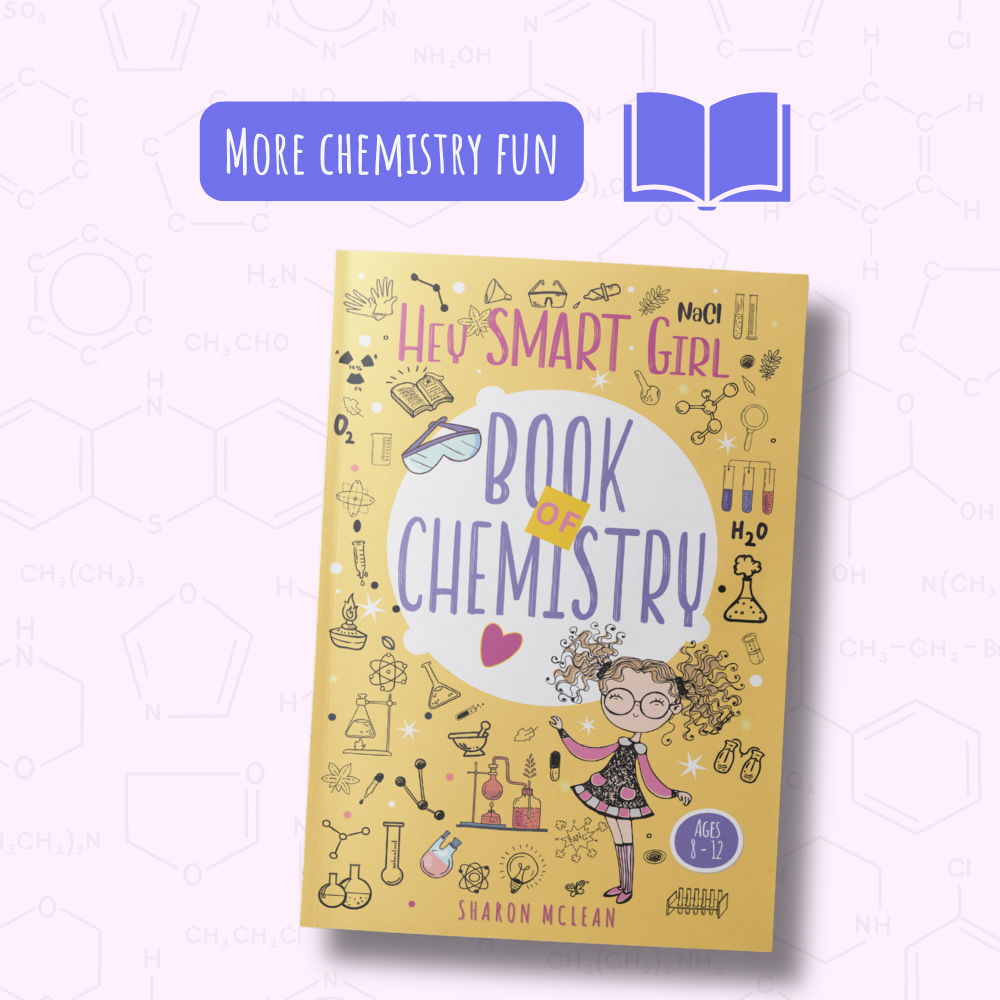
Most of these facts can be shared with children from around age 7 or 8 upwards — the concepts don’t require any prior science knowledge, and the asides give you just enough background to answer the inevitable follow-up questions. The Hey Smart Girl Book of Chemistry is written specifically for girls aged 8-12 and goes into all of these topics in much more depth, with experiments to match.
How do I get my daughter interested in chemistry without it feeling forced?
The most effective thing is to treat chemistry as normal dinner table conversation rather than a formal subject. Share a fact, let it land, and follow the conversation wherever it goes. You don’t need to have all the answers — curiosity is more contagious than knowledge.
Are there easy chemistry experiments we can try at home?
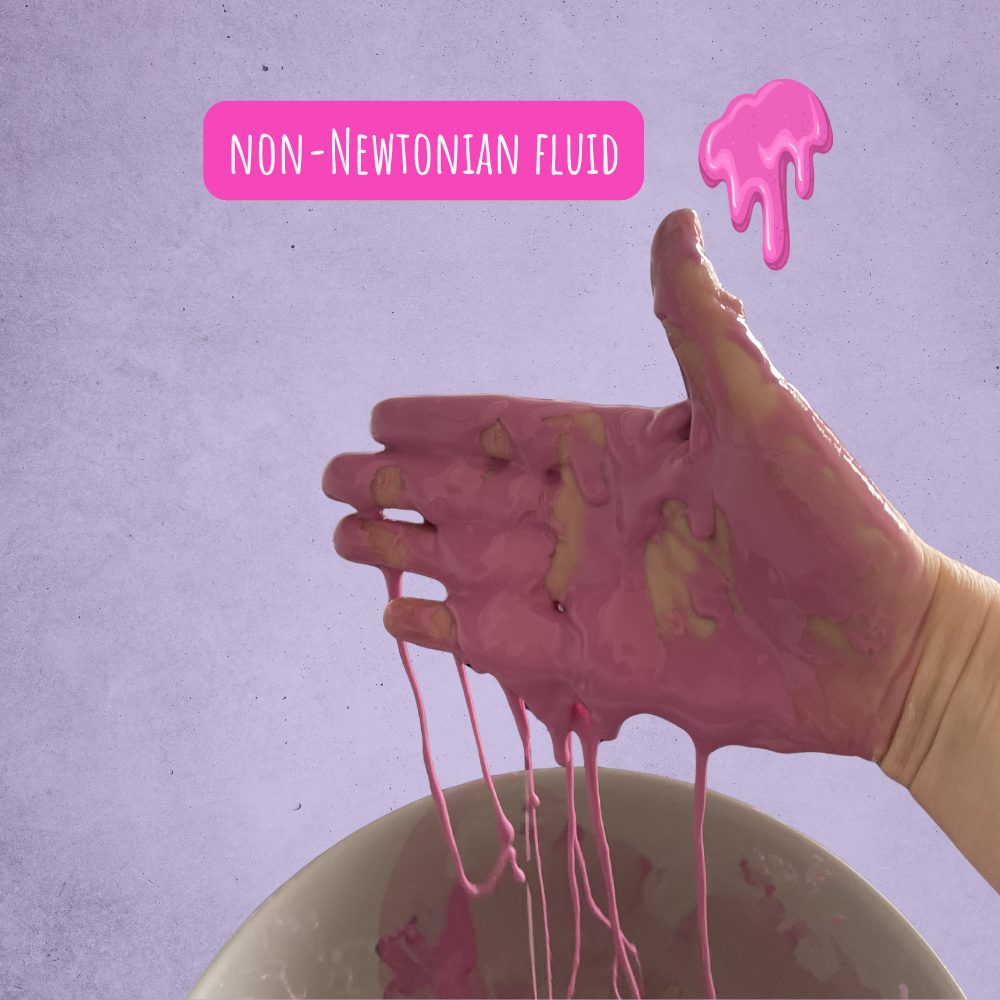
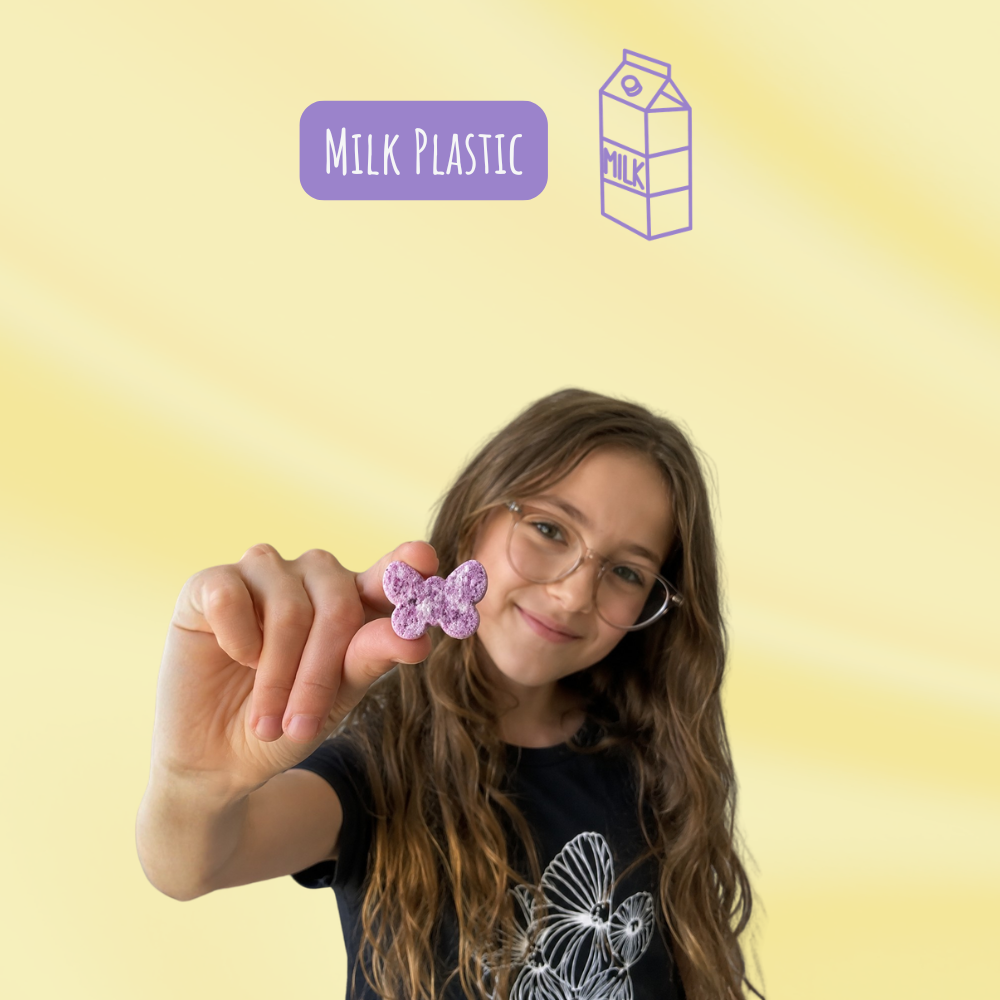
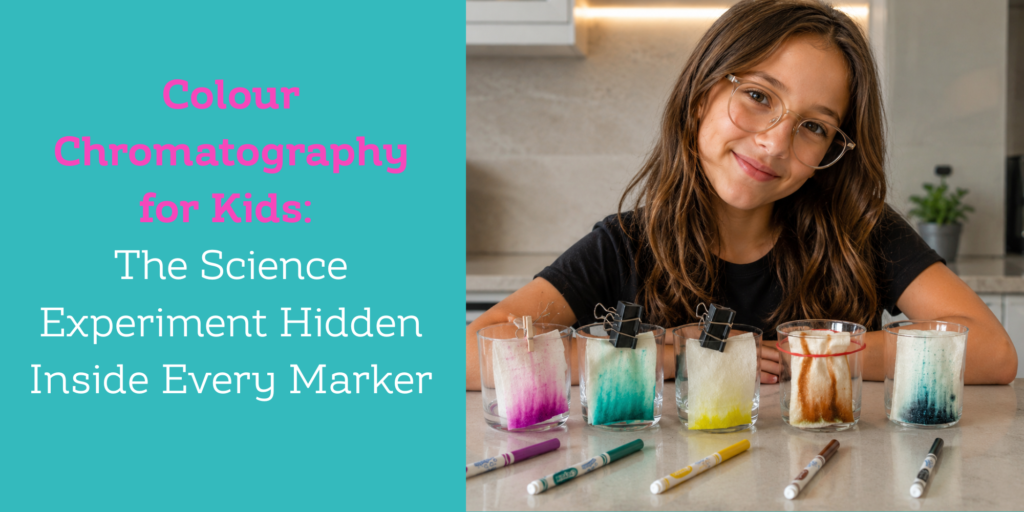
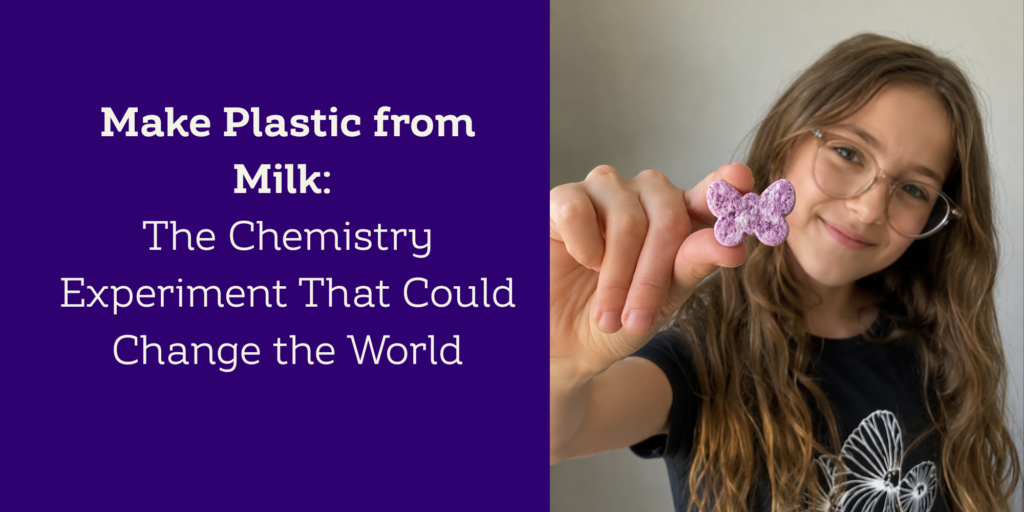
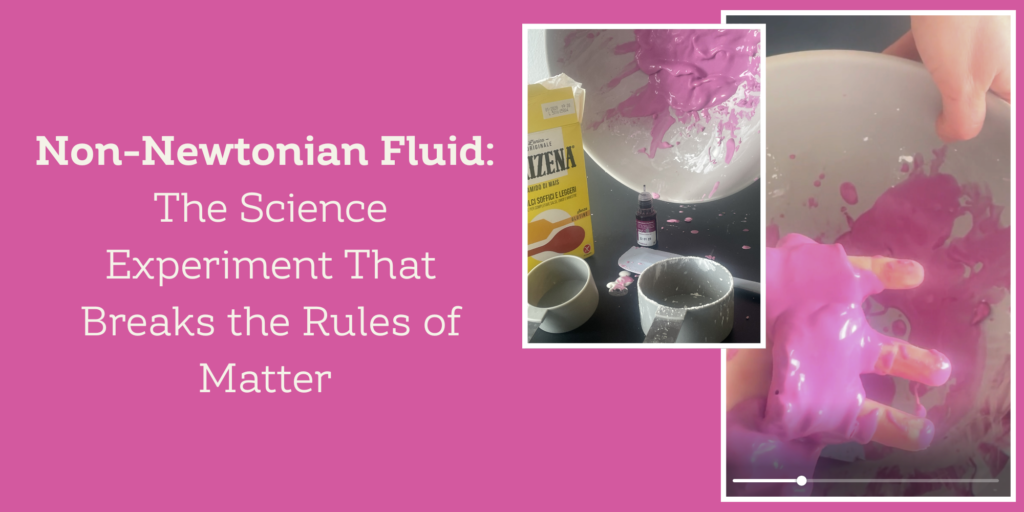
Loads — and most need nothing more than household items. Colour chromatography with washable markers, making plastic from milk, and the cornflour non-Newtonian fluid experiment are all excellent starting points — hands-on, genuinely fun, and grounded in real chemistry.
Why is it important for girls to be interested in chemistry?
Only around 20% of university engineering and chemistry students are girls, which means most of the people currently being trained to solve the world’s biggest chemistry-driven problems are boys. Girls are every bit as capable, and exposing them early to fascinating, accessible chemistry facts and experiments helps close that gap before it even starts.
Are there chemistry books for girls that make the subject accessible?
The Hey Smart Girl Book of Chemistry covers atoms, molecules, reactions, acids and bases, and the periodic table — with over 30 hands-on experiments, real women scientist stories woven throughout, and a tone that feels like your coolest aunt explaining the universe. Written for curious girls aged 8-12, available on Amazon.
One Response
Great content! Keep up the good work!