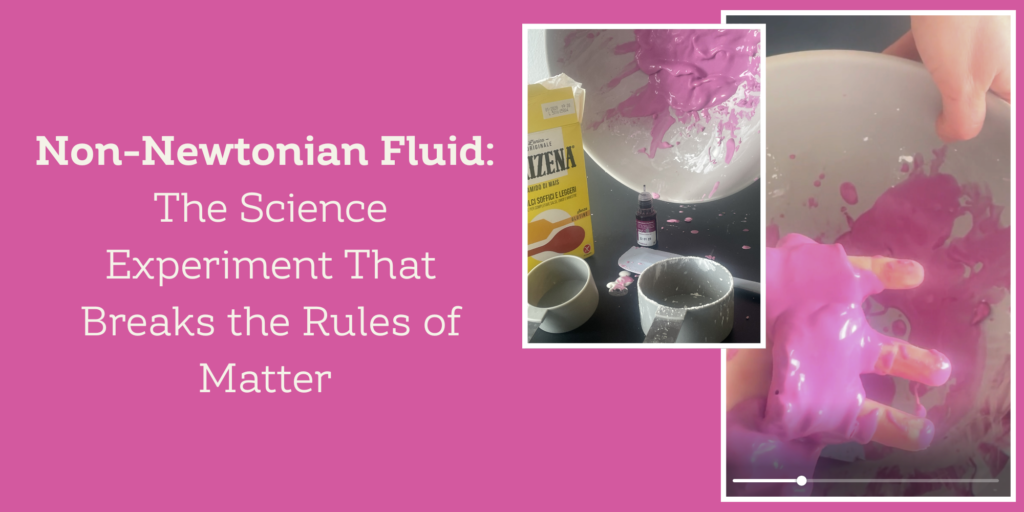
You know that feeling when you discover a science experiment with zero prep, zero special ingredients, and everything you need is literally already in your cupboard? I love that. And this one might be my favourite yet — not just for the kids, honestly for me too.
When I was making this for the blog I could have sat there for an hour. There’s something almost hypnotic about it, genuinely peaceful in a weird way I wasn’t expecting. Bang for buck this is hard to beat — costs nothing, takes about a minute to set up, and the results will have your kids completely mesmerised.
Try it yourself and let me know how you get on in the comments below — fair warning though, it can get a little messy depending on how much fun your kids decide to have with it!
So what exactly is a non-Newtonian fluid?
Normal liquids — water, juice, milk — behave consistently no matter what you do to them. Stir water fast or slow, it’s still water. Pour it gently or forcefully, it flows the same way. Scientists call this Newtonian behaviour, named after Isaac Newton who worked out the rules of how fluids move.
A non-Newtonian fluid doesn’t play by those rules. Its behaviour changes depending on how much force or pressure you apply to it. Push it slowly and it flows like a liquid. Hit it fast and hard and it acts like a solid. The moment you stop applying force, it’s liquid again.
It sounds impossible. It isn’t. And you can make it in five minutes with two ingredients you already have at home.
What You Need
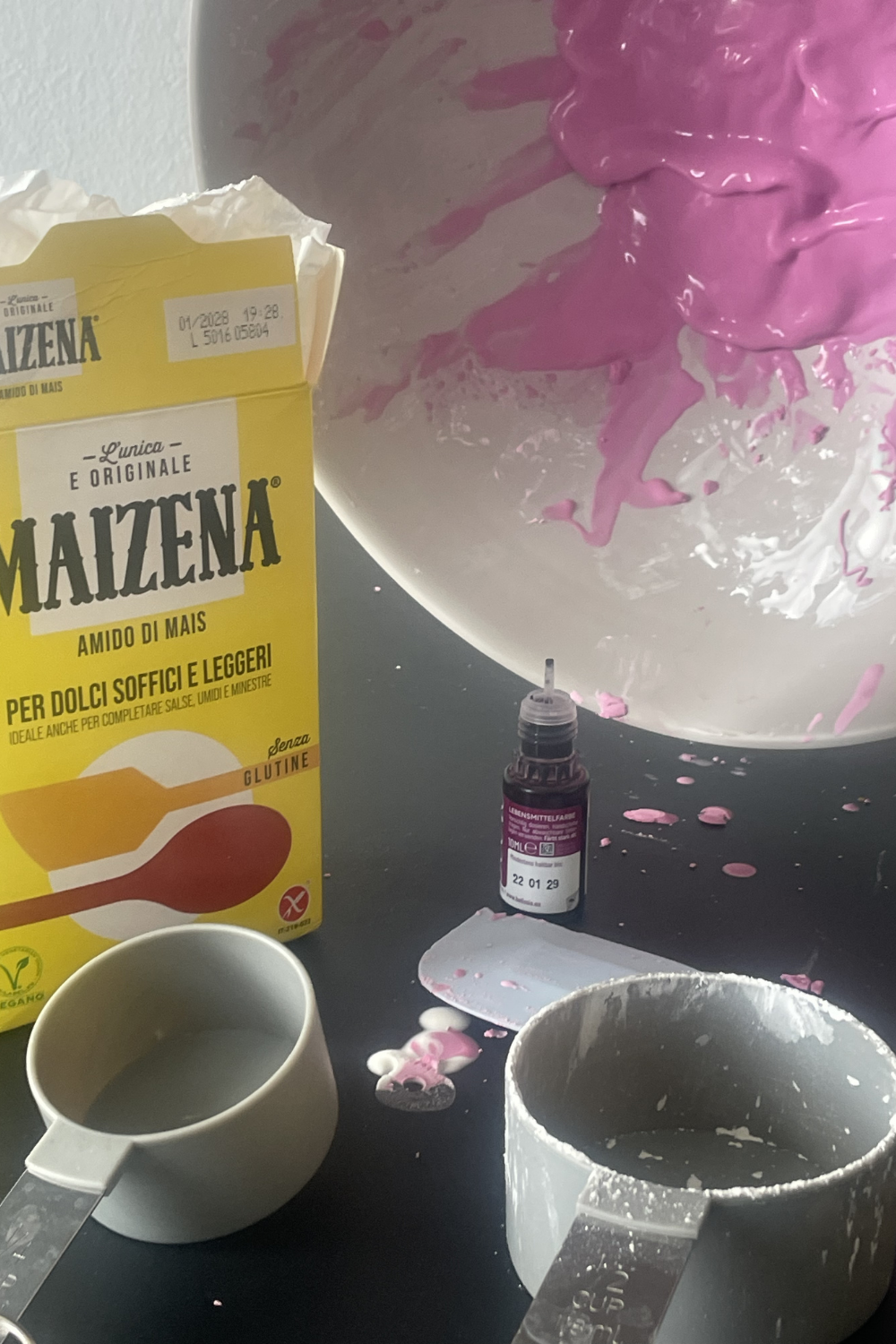
- 1 cup cornflour
- Half a cup of water
- Food colouring — optional but highly recommended. Pink obviously gets our vote
- A large bowl
- An old tablecloth or some newspaper to cover your surface — trust me on this one
How To Make It
- Pour your cornflour into the bowl.
- If you’re using food colouring, add it to the water first and mix until the colour is even.
- Slowly pour the water into the cornflour a little at a time, stirring as you go.
- Keep adding water gradually until the mixture feels like thick honey — it should be genuinely hard to stir slowly but liquid enough to pour. If it’s too stiff add a tiny splash more water, if it’s too runny add a little more cornflour.
- Now test it — dip your hand in slowly. Then slap the surface hard. Then try to roll a ball quickly in your palms and watch what happens the moment you stop.
How do you know when the consistency is right? It’s ready when stirring slowly feels like dragging through wet cement, tapping the surface sharply feels solid rather than splashy, and you can briefly roll it into a ball in your palms — but it melts and drips through your fingers the moment you stop. If it’s too runny, add cornflour a tablespoon at a time. If it’s too stiff, add water a teaspoon at a time. A tiny amount makes a big difference so go slowly.
The Science: What Is Actually Going On?
Cornflour is made up of tiny solid particles suspended in water. When you move slowly, those particles have time to slide past each other and the mixture flows like a liquid. But when you apply sudden force — a slap, a punch, a quick squeeze — the particles jam together instantly and lock up, behaving like a solid. The moment the force stops, they unlock and flow again.
This is called shear thickening — the faster you apply force, the thicker and more solid-like the mixture becomes. It’s the opposite of what most people expect, which is what makes it so startling the first time.
My son Laurie is six — a bit young to follow the science fully — but he absolutely got the magic of it. He punched the bowl, his fist bounced off, and he just looked at me with the most confused look on his face. Honestly one of my favourite science experiment moments to date.
Non-Newtonian fluids aren’t just a kitchen experiment either. Scientists are working on using this exact property in body armour — flexible enough to move freely but hardening instantly on impact. Laurie punching a bowl of cornflour paste is, in a very loose sense, the same science that could one day protect soldiers and emergency workers. Tell that to your kids and watch their faces.
The Book Connection
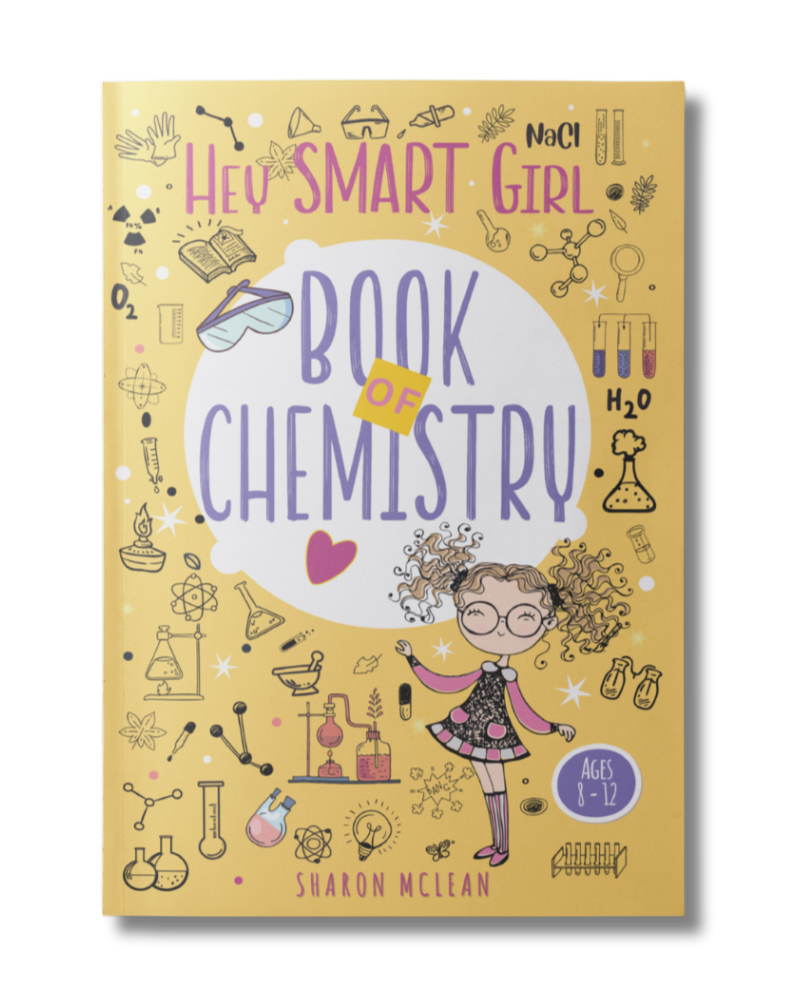
If your girl has read Hey Smart Girl: Book of Chemistry, she’ll have met states of matter in Chapter 7 — solids, liquids, and the rules that define them. A non-Newtonian fluid sits right at the edge of those categories and refuses to stay in either one. It’s a brilliant real-world example of why science rules are really more like guidelines — nature always has a few exceptions up its sleeve.
Tips Before You Start
- Use proper cornflour, not cornmeal or polenta — they won’t give you the same result.
- The ratio matters more than the quantity — keep it at roughly 2 parts cornflour to 1 part water and you can make as little or as much as you like.
- Don’t panic if it gets on clothes or the table — let it dry and it brushes off easily. Wiping it wet just spreads it further.
- Don’t pour it down the sink when you’re done — it will clog your drain. Scrape it into the bin instead.
- Good news for next time — pop any leftover mixture into an airtight container in the fridge and it will keep for a few days. It may separate slightly but a quick stir brings it straight back. One messy setup session, multiple rounds of fun.
Two ingredients, one bowl, and about a minute of setup. That’s all it takes to make matter break its own rules right on your kitchen table — in a way your child will be talking about for days, largely because they got to punch it.
And if she wanted to do it fifteen more times, kept asking why it worked, and started wondering what would happen if you added more cornflour — keep watching that one. The scientists and engineers of the future had to start somewhere. Today, she started in the kitchen. That is a very good place to begin.
More hands-on chemistry for curious girls
Pick one and do it this week — your future scientist will thank you.