Imagine the fastest thing in the universe.
Not a rocket. Not a jet. Not a cheetah.
Light. The thing that travels so fast it could circle the entire Earth seven times in a single second.
Now imagine slowing it down to the speed of a bicycle.
Then stopping it completely.
Then proving that the information it was carrying could be moved somewhere else — perfectly intact — and restarted.
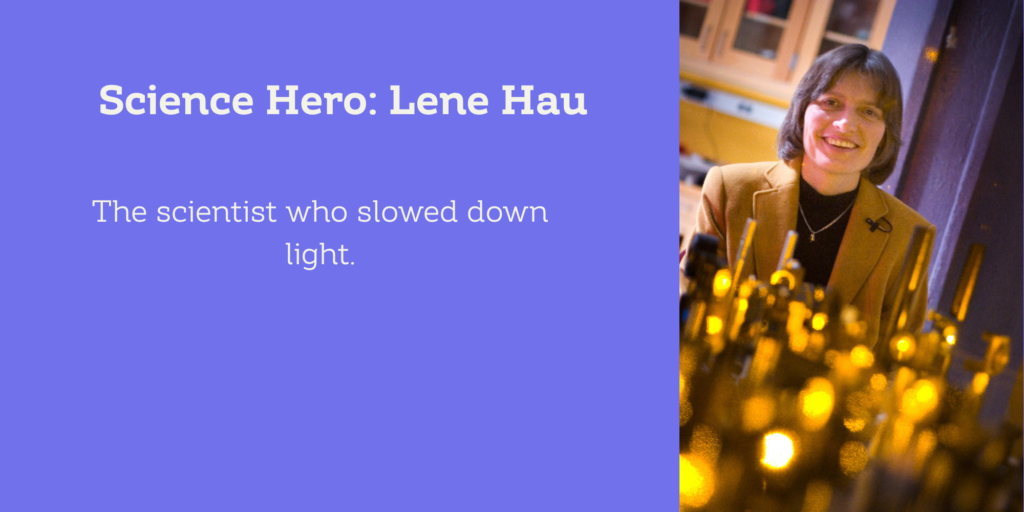
That is not science fiction. That is what Lene Hau did. And the technologies her work is helping to build will shape the world your daughter grows up in.
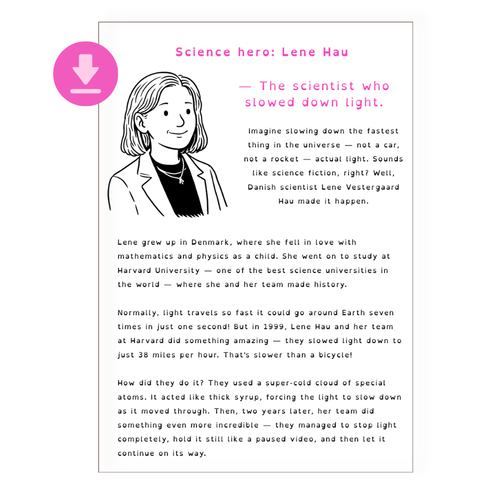
Want the printable story card?
The story
Lene Vestergaard Hau grew up in Vejle, Denmark, in the 1960s — a quiet, curious child who loved mathematics and the natural world.
She studied physics at Aarhus University, completing her PhD in 1991, and eventually made her way to Harvard University where she became a professor of physics and applied physics.
She was interested in an unusual state of matter that occurs when atoms are cooled to near absolute zero. At these extreme temperatures, atoms begin to behave in extraordinary ways — ways that Lene believed could do something remarkable to light passing through them.
In 1999 she proved she was right.
By firing a laser beam through an ultra-cold cloud of atoms, her team slowed light from its normal speed of 186,000 miles per second to just 38 miles per hour — slower than a bicycle, slower than a running child, slower than almost anything you can imagine.
The scientific world stopped in its tracks.
Then in 2001 she went further. Her team stopped the light completely — holding it perfectly still inside the atom cloud like pressing pause on a signal — and then released it to continue on its way.
But the step that truly astonished the physics world came next.
Her team transferred the stored information to a second cloud of atoms nearby. When the light was recreated, it emerged from the second cloud carrying exactly the same information as before.
She had shown that information carried by light could be slowed, stored, moved, and restarted.
Lene Hau once described her work as: “Physics is about questioning, studying, probing nature — you probe, and if you’re lucky, you get strange clues.” That is exactly what she did.
Want to make this idea real?
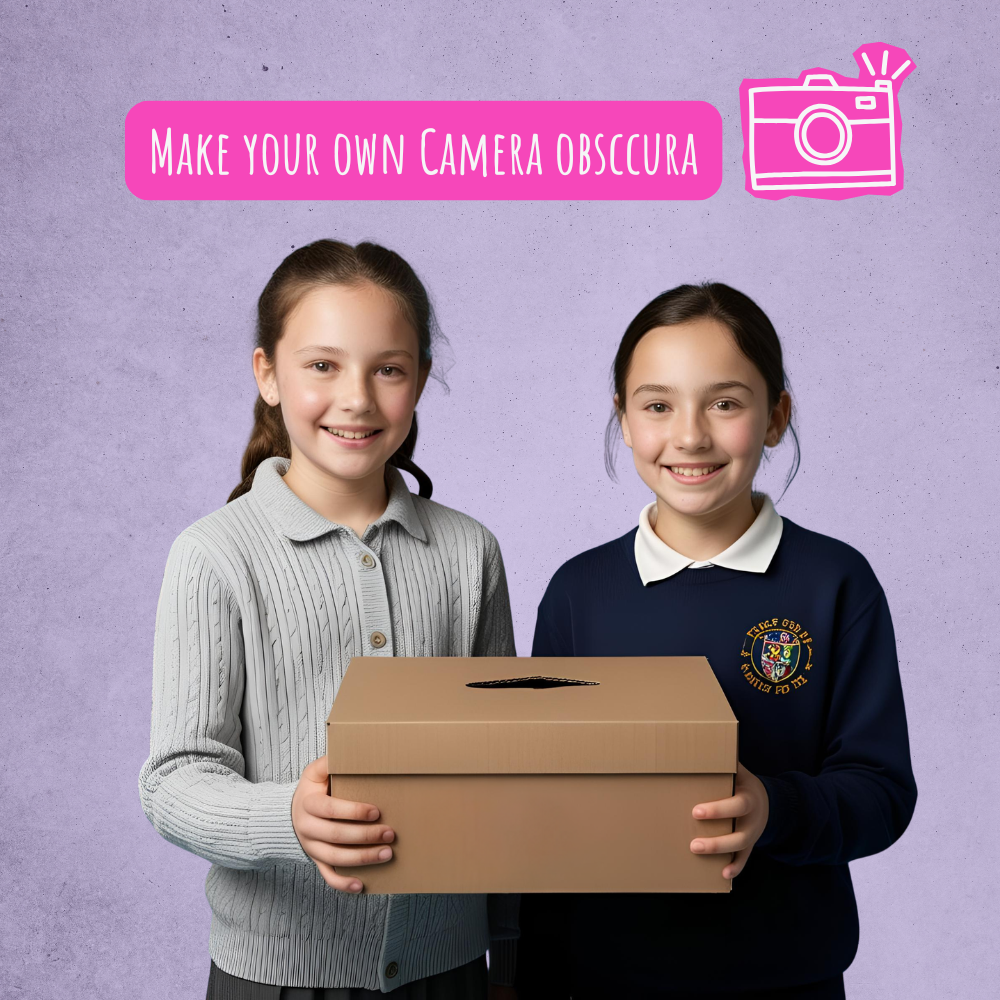
You can explore how light travels and bends with this simple camera obscura experiment — the same principle of light carrying information that Lene spent her career studying.
The science — what did she actually do?
Before we get to what Lene did, there is something important to understand about light.
Light doesn’t just travel. It carries information.
This is how the internet works right now. Data travels as pulses of light through fibre optic cables — thin glass threads — at extraordinary speed. Every email, video, and message you send is encoded in light. Light is one of the most powerful information-carrying tools we have.
Which means that when Lene stopped light — she didn’t just stop a beam. She froze information in place.
Here’s how she did it.
When atoms are cooled to almost absolute zero — the coldest temperature physically possible — something extraordinary happens. Normally, atoms move around independently. But at these extreme temperatures, they begin to behave as if they are a single unified quantum system, all moving in perfect synchrony.
Think of it like a crowd of people suddenly moving together in perfect unison, like one coordinated group instead of thousands of individuals.
This unusual state of matter allows scientists to control how light moves through it in remarkable ways.
In 1999, Lene Hau and her team sent a pulse of light through an ultra-cold cloud of atoms. The light slowed from 186,000 miles per second to just 38 miles per hour — slower than a bicycle.
Then they did something even more astonishing.
They effectively stopped it.
Not by freezing light in place like a solid object, but by transferring its information into the atoms themselves — holding it there, like pressing pause on a signal.
Then came the step that changed everything.
Her team transferred that stored information to a second cloud of atoms nearby. When the light was recreated, it emerged from the second cloud carrying the same information as before.
She had shown that the information carried by light could be slowed, stored, moved, and restarted.
This level of control over light and information is a key step toward quantum communication and future quantum technologies — systems that could transform everything from medical research to global security within your daughter’s lifetime.
Why it matters today
Lene Hau’s experiments weren’t just extraordinary physics demonstrations. They opened doors that scientists are still walking through today.
Quantum computing — the computers of the future will process information in fundamentally different ways to today’s machines. Controlling and storing light at this level is a key building block. A quantum computer running at full capacity could solve problems in minutes that would take today’s fastest supercomputers millions of years.
Quantum communication — unhackable communication networks based on quantum principles. The ability to transfer information stored in light — exactly what Lene demonstrated — is central to how these systems would work.
Medical research — quantum technologies are already beginning to transform drug discovery, genomics, and diagnostic imaging. The faster and more powerful our information systems become, the faster science can find answers to the hardest problems in medicine.
The technologies her discoveries are helping to enable are not distant dreams. They are being actively developed in laboratories right now, built on foundations she helped lay.
What your daughter can take from this story
- She asked an impossible question — and answered it. “What if we could slow light?” is not an obvious scientific question. Lene asked it anyway.
- The best discoveries come from curiosity, not ambition. She wasn’t trying to invent quantum computers. She was trying to understand something beautiful and strange about the physical world.
- Modern science belongs to women too. This isn’t history. Lene Hau is a professor at Harvard University working today on science that will shape the future.
- Patience is a scientific skill. Creating the conditions for her experiment required extraordinary precision and persistence. She didn’t rush. She got it right.
Let her read it herself
Download the printable version of Lene’s story — written just for girls.
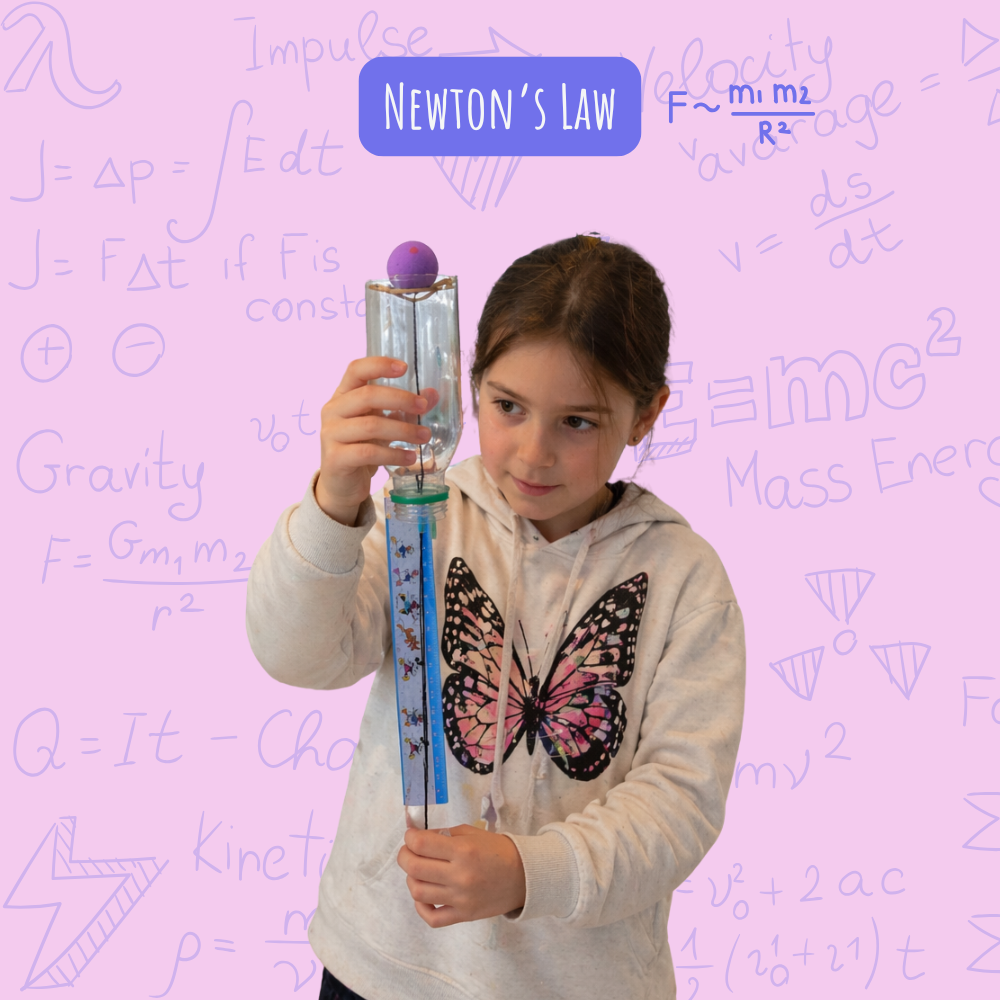
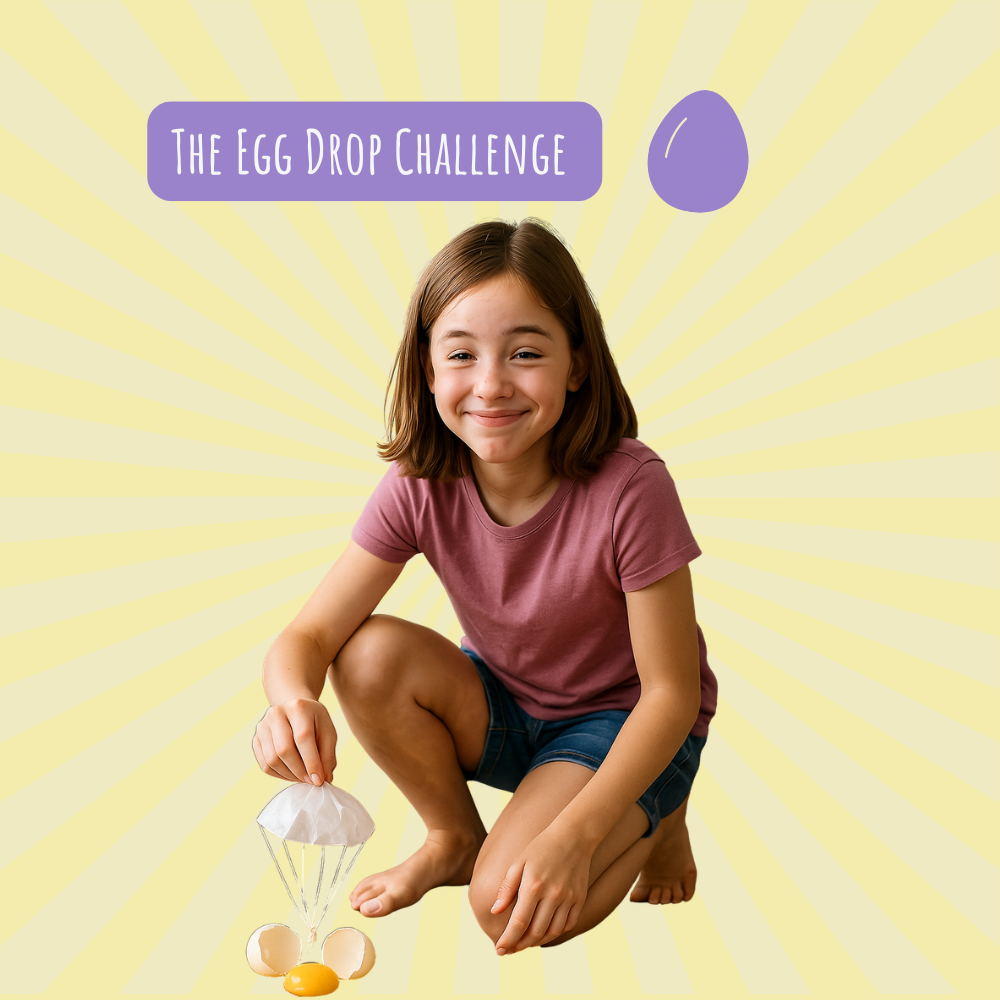
More hands-on physics for curious girls
Pick one and do it this week — your future scientist will thank you.
Loved this topic?
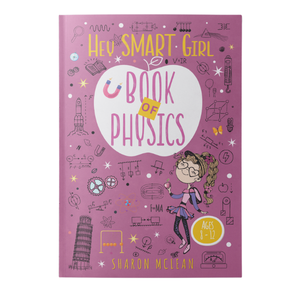
The Hey Smart Girl Book of Physics explores forces, motion, light, sound, electricity, and the brilliant scientists — including women like Lene Hau — who changed how we understand our universe.
Explore the Physics BookFAQs: Lene Hau for Kids
Who is Lene Hau?
Lene Vestergaard Hau is a Danish physicist and professor at Harvard University. In 1999 she slowed light to 38 miles per hour — slower than a bicycle — and in 2001 she stopped it completely and proved that the information it carried could be transferred and restarted. She is widely considered one of the most creative experimental physicists working today.
How did Lene Hau slow down light?
She sent a pulse of light through an ultra-cold cloud of atoms cooled to almost absolute zero. At this extreme temperature, the atoms begin to behave as a single unified system rather than independent particles, creating conditions that dramatically slow and eventually stop light passing through them. Think of it like the difference between throwing a ball through air versus through thick treacle — the medium changes everything.
Why does light carry information?
Light doesn’t just illuminate — it can encode data in its properties, such as its frequency and pattern of pulses. This is exactly how fibre optic internet works. Every email, video, and message you send travels as pulses of light through glass cables. When Lene stopped light, she wasn’t just stopping a beam — she was freezing information in place, which is what makes her work so significant for the future of computing and communication.
What is quantum computing — and why does Lene Hau’s work matter for it?
Quantum computers process information in fundamentally different ways to today’s machines, using quantum properties of matter and light. They have the potential to solve problems in minutes that would take today’s fastest computers millions of years — from drug discovery to climate modelling. Lene’s demonstration that light information can be stopped, stored, moved, and restarted is a key building block for the quantum communication systems these computers will rely on.
How do I inspire my daughter to be interested in science?
The best starting point is showing her that science belongs to her — through stories of women like Lene Hau who are changing the world right now, and through hands-on experiments she can try at home. Our post on the benefits of science for girls covers exactly this. The short answer: make it real, make it hands-on, and show her the women who are doing it today.
Where can I find more inspiring stories of female scientists for kids?
The Hey Smart Girl blog features profiles of brilliant women in science written for girls aged 8–12 and the parents who want to inspire them. You’ll find the stories of Mary Anning, Sylvia Earle, Inge Lehmann, and Lise Meitner — new stories added regularly. Explore the full blog here.
Are there science books for girls that include women in STEM stories?
Yes — the Hey Smart Girl series weaves real women scientist stories into every book alongside hands-on experiments and clear science explanations. The Hey Smart Girl Book of Physics includes Lene Hau’s story alongside 30+ experiments covering forces, motion, light, sound and electricity — written for curious girls aged 8–12.
What physics experiments can kids try at home?
Loads — and most need nothing more than household materials. Try the Newton’s Laws kitchen experiments, the Inertia Hat, the Camera Obscura which explores exactly how light travels — directly connected to Lene’s work — and 5 science tricks with a glass that look like magic but are pure physics.