This post contains affiliate links. If you purchase through one of my links, I may earn a small commission at no extra cost to you. I only recommend books I genuinely love.
If you’re looking for a way to fill summer with meaningful, screen-free moments and spark your daughter’s inner scientist — welcome to STEM Summer Camp at Home.
This post gives you 20 easy experiments to do together, one for each weekday over 4 weeks. Every activity is simple to set up, uses mostly household items, and includes a “What’s Happening?” explanation to help her connect the dots.
The best part? These experiments build confidence, curiosity, and problem-solving skills — without ever feeling like school. Whether she’s into explosions or ice cubes, gravity or glitter, you’ll find something in here to make her eyes light up.
Week One: Kitchen Table Chemistry
1. Magic Milk Explosion
You’ll need: a plate, milk, food colouring, dish soap, cotton swab
- Pour milk into a plate.
- Add drops of food colouring in the centre.
- Dip a cotton swab into dish soap and touch the milk’s surface.
2. Balloon Blow-Up (No Mouth Needed!)
You’ll need: a balloon, plastic bottle, vinegar, baking soda, funnel
- Pour vinegar into the bottle (about a third full).
- Use the funnel to add baking soda into the balloon.
- Carefully stretch the balloon over the bottle top, keeping the baking soda inside.
- Lift the balloon so the baking soda falls in.
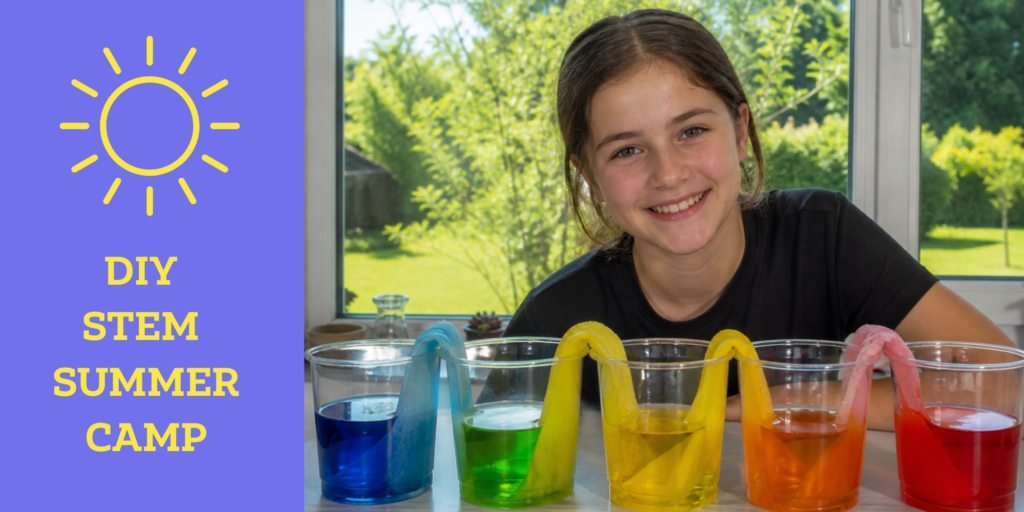
3. Rainbow Walking Water
You’ll need: 6 clear cups, water, paper towels, food colouring
- Fill 3 cups with water and add red, yellow, and blue colouring.
- Arrange them alternating with 3 empty cups.
- Fold paper towels and use them to connect each cup.
4. DIY Slime Lab
You’ll need: white glue, baking soda, contact lens solution
- Mix half a cup of glue with 1 tbsp baking soda.
- Add 1 tbsp contact lens solution and stir.
- Knead until it firms up into slime.
5. Lemon Volcanoes
You’ll need: lemons, baking soda, dish soap, food colouring, spoon
- Cut a lemon in half and place it in a dish.
- Poke the inside with a spoon to release the juice.
- Add food colouring and a squirt of dish soap.
- Sprinkle baking soda and watch the fizz.
Week Two: Outdoor Physics and Forces
6. Alka-Seltzer Rockets
You’ll need: film canister, Alka-Seltzer tablet, water
- Fill the canister a quarter full with water.
- Add half a tablet, close the lid quickly, and place it upside down.
- Step back!
7. Water Balloon Pendulum
You’ll need: water balloon, string, broomstick or tree branch
- Tie string to the balloon and hang it like a swing.
- Pull it back and let go.
8. Shadow Drawing Challenge
You’ll need: toys, sidewalk or paper, pencil, sunshine
- Set toys in the sun and trace their shadows.
- Come back at different times and trace again.
9. DIY Parachute Drop
You’ll need: coffee filter, string, tape, paper clip
- Attach 3–4 strings to a coffee filter and tape a paper clip to the bottom as a weight.
- Drop from a height and observe.
10. Sprinkler Rainbows
You’ll need: hose or sprinkler, sunlight
- Turn on the sprinkler on a sunny day.
- Look from the side to spot a rainbow in the mist.
Week Three: Cool and Frozen Science
11. Frozen Marbles
You’ll need: balloons, water, food colouring, freezer
- Fill balloons with coloured water.
- Freeze overnight, then peel off the balloon to reveal an ice marble.
12. Salt and Ice Challenge
You’ll need: ice cube, string, salt
- Lay the string on top of an ice cube.
- Sprinkle salt over the string, wait a minute, then lift.
13. Melting Race
You’ll need: ice cubes, metal, wood, plastic, fabric
- Place an ice cube on each material and observe which melts fastest.
14. Snowstorm in a Jar
You’ll need: clear jar, baby oil, white paint mixed with water, Alka-Seltzer
- Fill the jar three-quarters full with baby oil.
- Add the white paint and water mixture.
- Drop in a small piece of Alka-Seltzer and watch.
15. Popsicle Stick Chain Reaction
You’ll need: popsicle sticks (at least 20)
- Weave the sticks in an over-under tension pattern.
- Let go of one end and watch the chain snap apart.
Week Four: Engineering and Everyday Inventions
16. Marshmallow Catapult
You’ll need: popsicle sticks, rubber bands, plastic spoon, marshmallows
- Stack 7 sticks and secure with rubber bands at each end.
- Place one stick across the stack and rest a spoon on top.
- Press the spoon down, load a marshmallow, and launch.
17. Build a Boat and Test It
You’ll need: foil, coins, tub of water
- Shape a boat from foil.
- Add coins one at a time until it sinks.
- Try different shapes and see which holds the most.
18. Egg Drop Engineering
You’ll need: raw egg, tape, straws, cotton balls, newspaper
- Design a protective container for your egg using whatever materials you have.
- Drop from shoulder height and see if the egg survives.
19. Paper Airplane Flight Test
You’ll need: paper, ruler or tape measure
- Fold several different plane designs.
- Throw each one and measure how far it travels.
20. DIY Solar Oven (Make S’mores!)
You’ll need: pizza box, foil, black paper, plastic wrap, marshmallows, chocolate, crackers
- Line the inside of the box with foil and black paper.
- Stretch plastic wrap across the lid opening to create a window.
- Place s’mores inside, close the lid, and set in full sun for 30+ minutes.
A Final Thought
This STEM Summer Camp at Home is more than a checklist — it’s a memory maker. These simple experiments show her that science isn’t just in textbooks. It’s in the kitchen, the garden, the sky, and her own two hands.
So grab a few supplies, carve out a little time each day, and let the fun unfold. When you nurture her curiosity, you build more than knowledge — you build confidence, joy, and a genuine sense of wonder that stays with her long after summer ends.
Keep the STEM Learning Going All Year
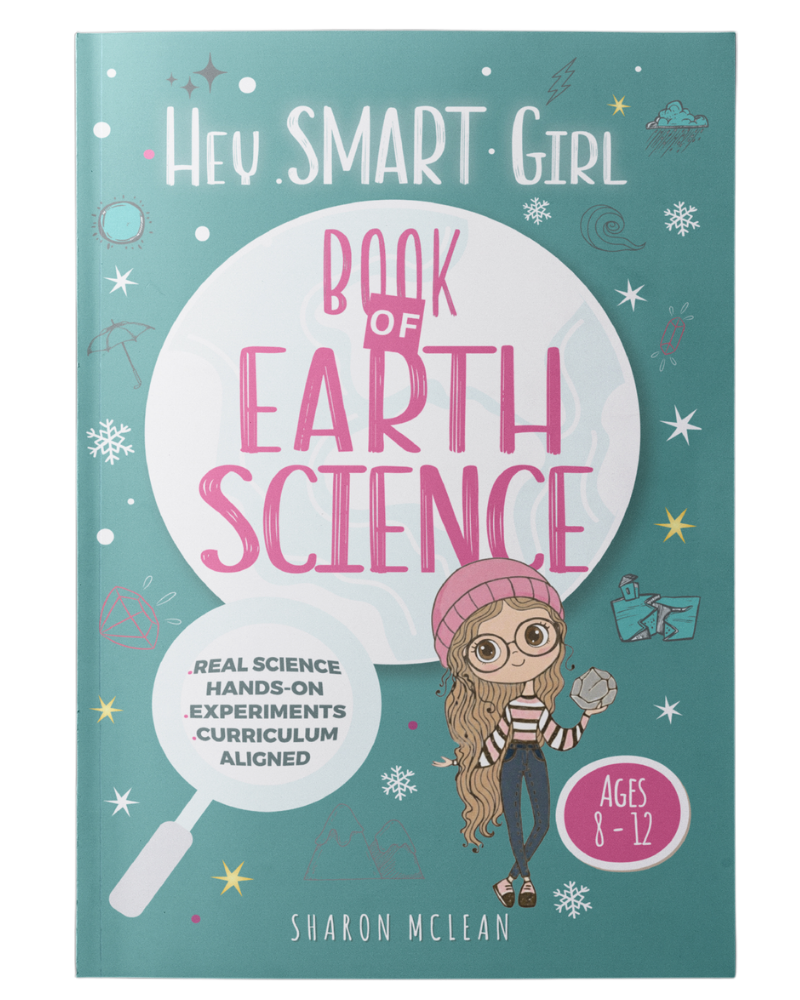
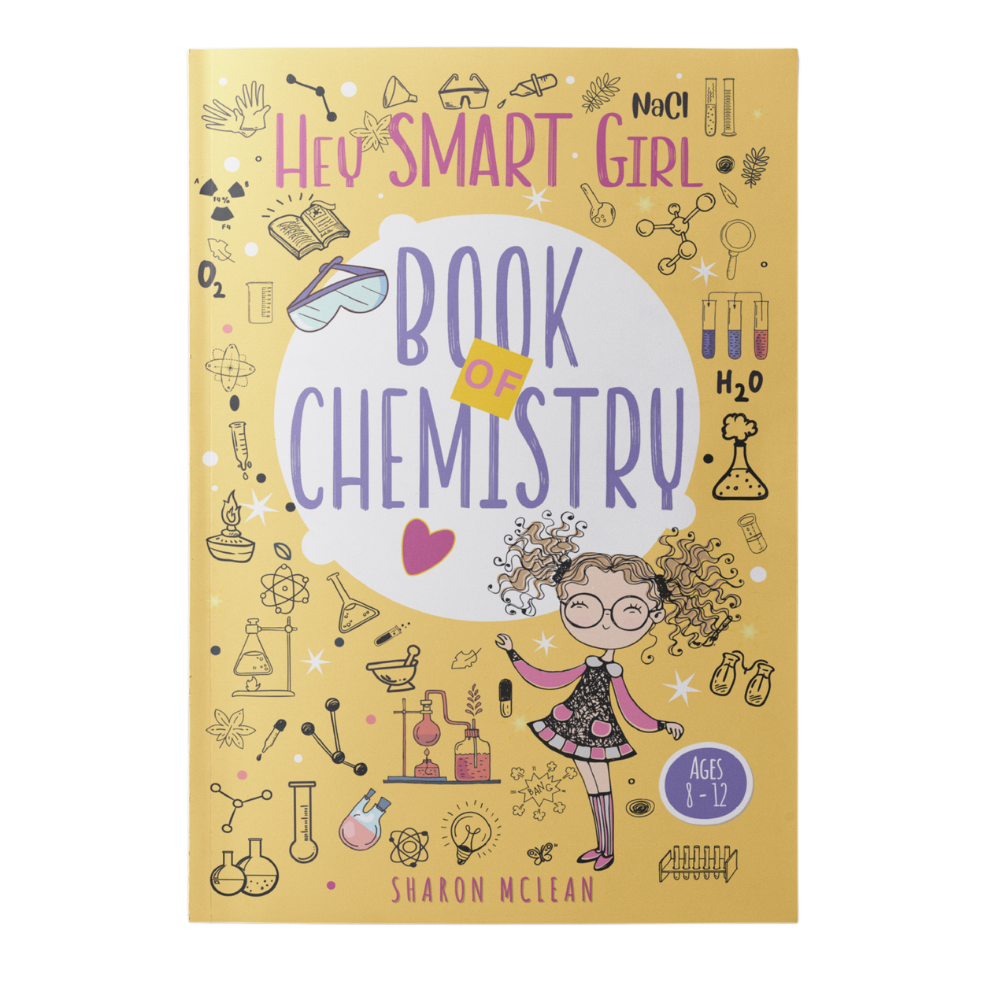
If your daughter loved these experiments, she’ll love the Hey Smart Girl series — science books designed for girls ages 8–12 that make learning feel like play. Real experiments, clear explanations, and inspiring women in science, all in one place.
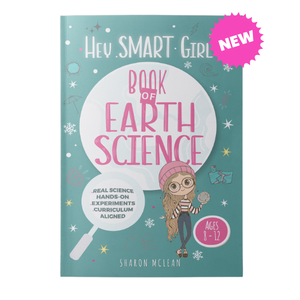
Earth Science
Volcanoes, weather, oceans, rocks, and the story of our planet.
Discover the Earth Science BookNot Sure Where to Start?
Download a free chapter of the Earth Science book and let her try it for herself — real experiments, real science, and zero school-ish energy.
Glossary for Curious Minds
- Surface tension: The “skin” on water created by water molecules sticking together.
- Capillary action: How water moves upward through narrow spaces, like paper towels.
- Polymer: A long, stretchy molecule made of repeating units — like slime.
- Projectile motion: How things move when thrown or launched, like rockets.
- Buoyancy: The upward force that helps things float in water.
- Solar energy: Power from the sun’s light and heat.
- Thermal energy: Heat energy that transfers between materials.
- Aerodynamics: The way air moves around objects — important for flight.
- Elastic energy: Energy stored in things that can stretch or bend.
- Kinetic energy: The energy of motion — what moving things have.
Frequently Asked Questions
What age is this STEM summer camp at home suitable for?
These activities are designed for girls aged 7–12, though many can be adapted for younger or older children with adult supervision.
Do I need to buy special supplies for these experiments?
Most activities use everyday household items like baking soda, vinegar, food colouring, balloons, paper, and foil. A few need simple extras like Alka-Seltzer tablets or contact lens solution.
How long does each experiment take?
Most experiments take between 15 and 30 minutes, making them easy to fit into a summer morning or afternoon without much preparation.
Can I use these activities for homeschool science lessons?
Absolutely. Each experiment includes a simple explanation of the science behind it, making them easy to use as standalone lessons or to supplement a broader curriculum.
What if my daughter wants to keep exploring science after the 4 weeks?
The Hey Smart Girl series is a great next step. Each book covers a different science subject — physics, chemistry, earth science, and biology — with hands-on experiments, clear explanations, and inspiring women in science. You can find the full series on Amazon here.